

Making Monterey Memories
by Zach Rosen
There’s a reason why Monterey lives on in both novels and tourism. Sure, John Steinbeck romanticized the locale, but the sheer beauty of the place was established far before, and is what keeps bringing people back.
Between living history and natural splendor, the sweep of highway leading into Monterey draws visitors deeper into the adventure and memories. Museums, historic sites, art, and shopping — couples and families can find exactly what they enjoy, while creating the memories they want to keep.
A Museum for Every Moment
Monterey is somewhere you have probably heard about, but probably not a place you have actually learned about. From the drafting of California’s first constitution to the internationally renowned aquarium, the town meets any visitor where they are.
A visit to Colton Hall – where California’s first constitution was born – sets the tone for any visit. There is a quiet dignity to the room and its preserved desks, the windows, and sense of civic order that still feels intact. Just next door sits the Old Monterey Jail. Families can enjoy the thick walls and jokes about locking up the troublemaker in the family. On Cannery Row, the preserved cannery workers’ shacks deepen the narrative. Families, couples, and solo adventurers alike will love being immersed in the local human story of Monterey. The Pacific Biological Laboratories, Ed Ricketts’ former workspace, adds a literary layer for those familiar with Steinbeck.
The Monterey Museum of Art gives visitors a chance to focus on California painters and photographers — artists who captured coastal light long before visitors filtered it through smartphone lenses. The museum’s scale encourages lingering; its galleries feel intimate, inviting slow looking and conversation. Parents bringing children will find a similar comfort in the manageable size. The works are varied enough to spark questions — about color, landscape, portraiture — without overwhelming young attention spans.
The Monterey History & Art Association provides additional depth through exhibitions rooted in place. Explore the historic adobes, curated narratives, and artifacts from different eras, while imagining Monterey as it existed before canneries or car travel.
Exhibits at the Stanton Center, including the Jo Mora Collection, bridge the worlds of art, cartography, and playful illustration – equally engaging for adults who appreciate Mora’s stylized interpretations and kids who respond instinctively to the characters and storytelling embedded in his maps.
Smaller galleries in Monterey and Pacific Grove give visitors a chance to browse at their own rhythm, slipping into side-street studios or contemporary spaces. For families, these stops become brief, colorful interludes – easy to enter, easy to exit, always sparking a bit of curiosity.
The Youth Arts Collective often inspires older children and teens by showing real young artists at work. Couples enjoy the community energy; families appreciate the reminder that creativity is not passive, but something practiced and lived.
Walking Cannery Row
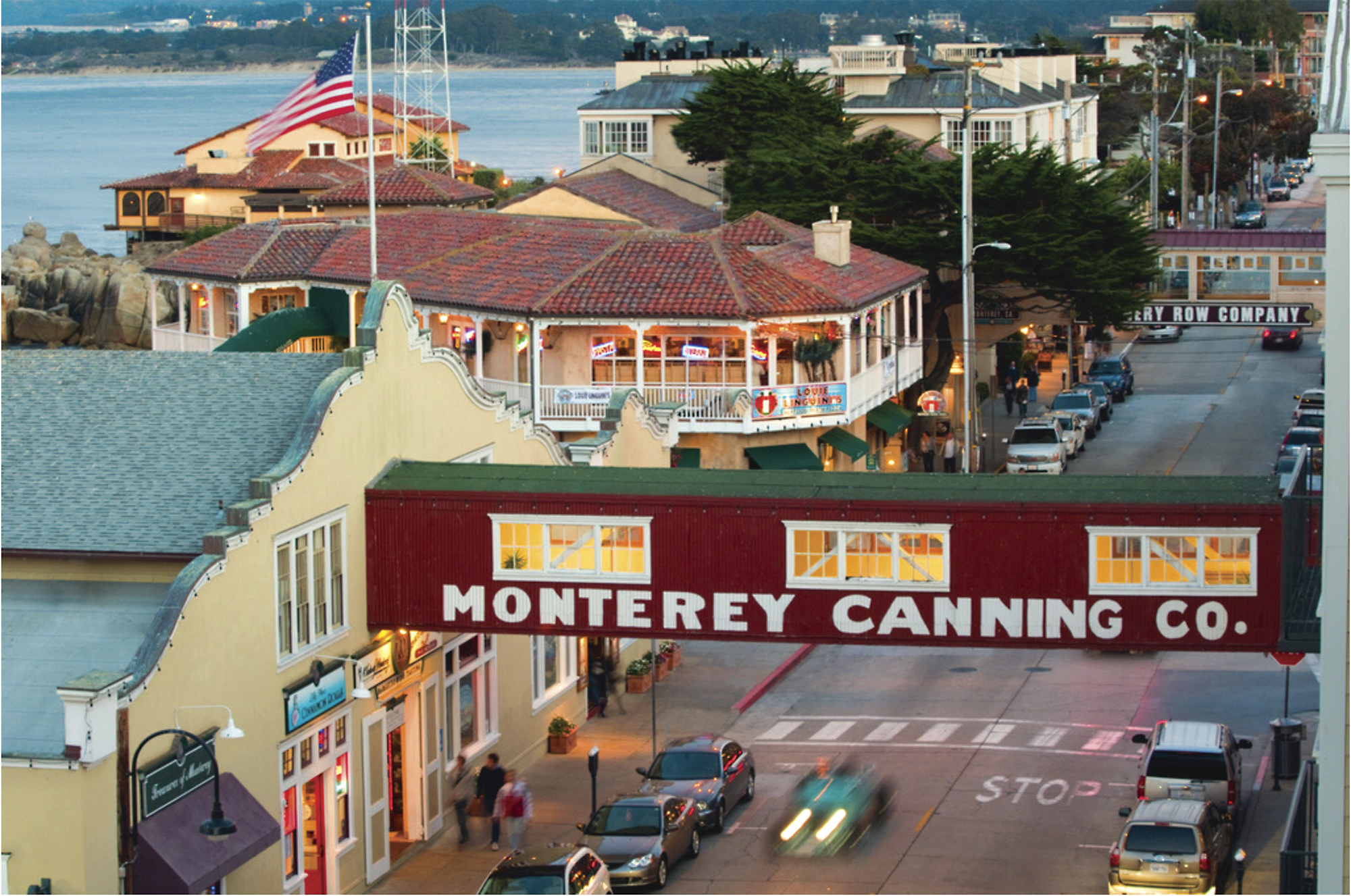
Cannery Row welcomes travelers with the sense that they’ve stepped into a place where the past is given into waterfront views. In recent history, Cannery Row was a world defined by industry and immigrant labor. Sardine production soared during the early 20th century, turning the area into a booming, cacophonous corridor of smoke, steam, and machinery.
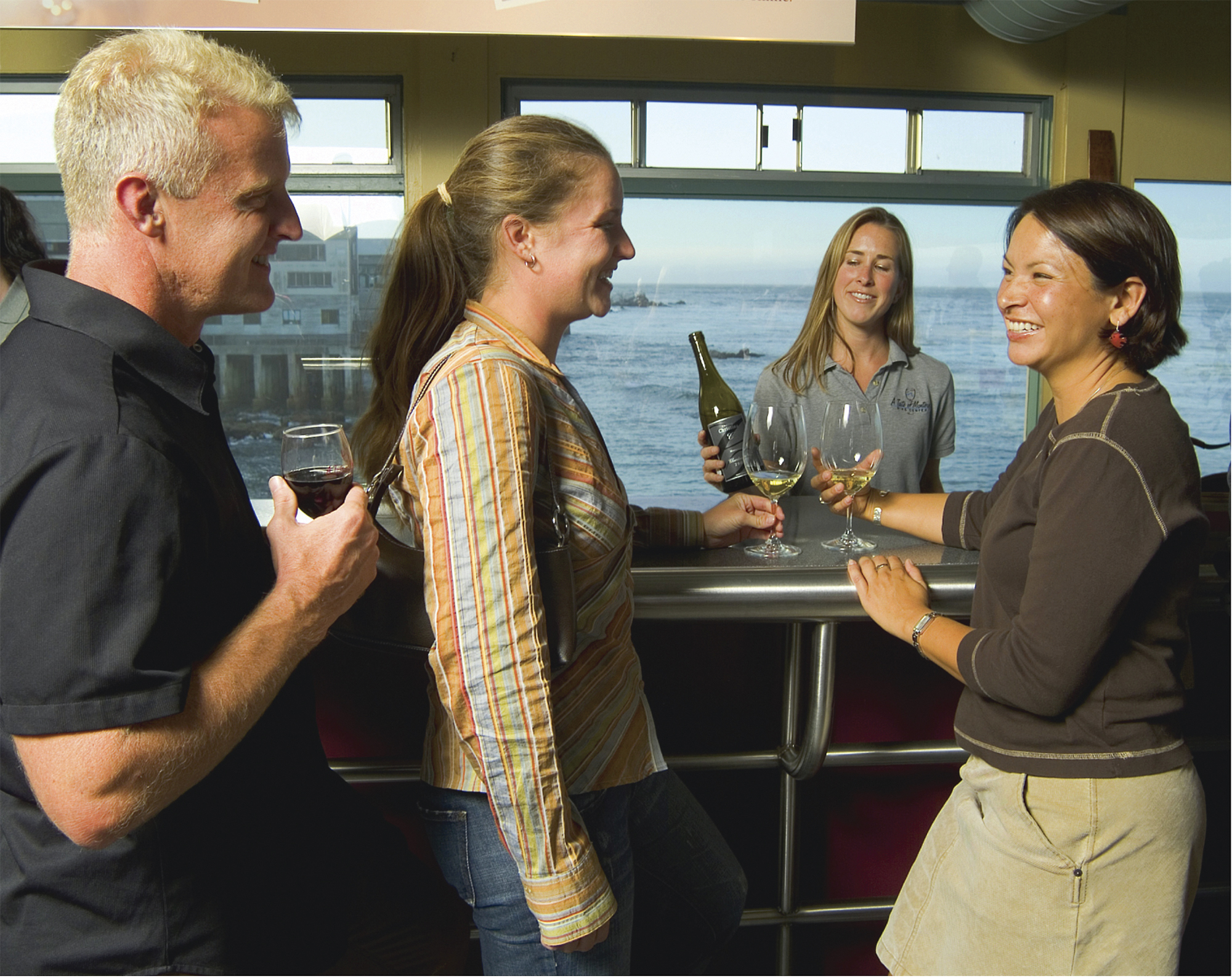
Today’s Cannery Row is not as raucous but is just as poetic, with its historic architecture, tasting rooms, boutiques, restaurants, and galleries. This layering creates a distinctive destination without sacrificing the sense of place. For couples, the Row becomes a long, scenic promenade. They drift between shops, linger over coffee, and pause at the water’s edge. Wine flights at A Taste of Monterey come with panoramic bay views. Hotels like the Monterey Plaza Hotel & Spa place guests directly above the surf, appealing to those looking for a retreat that still feels connected to the street-level bustle.
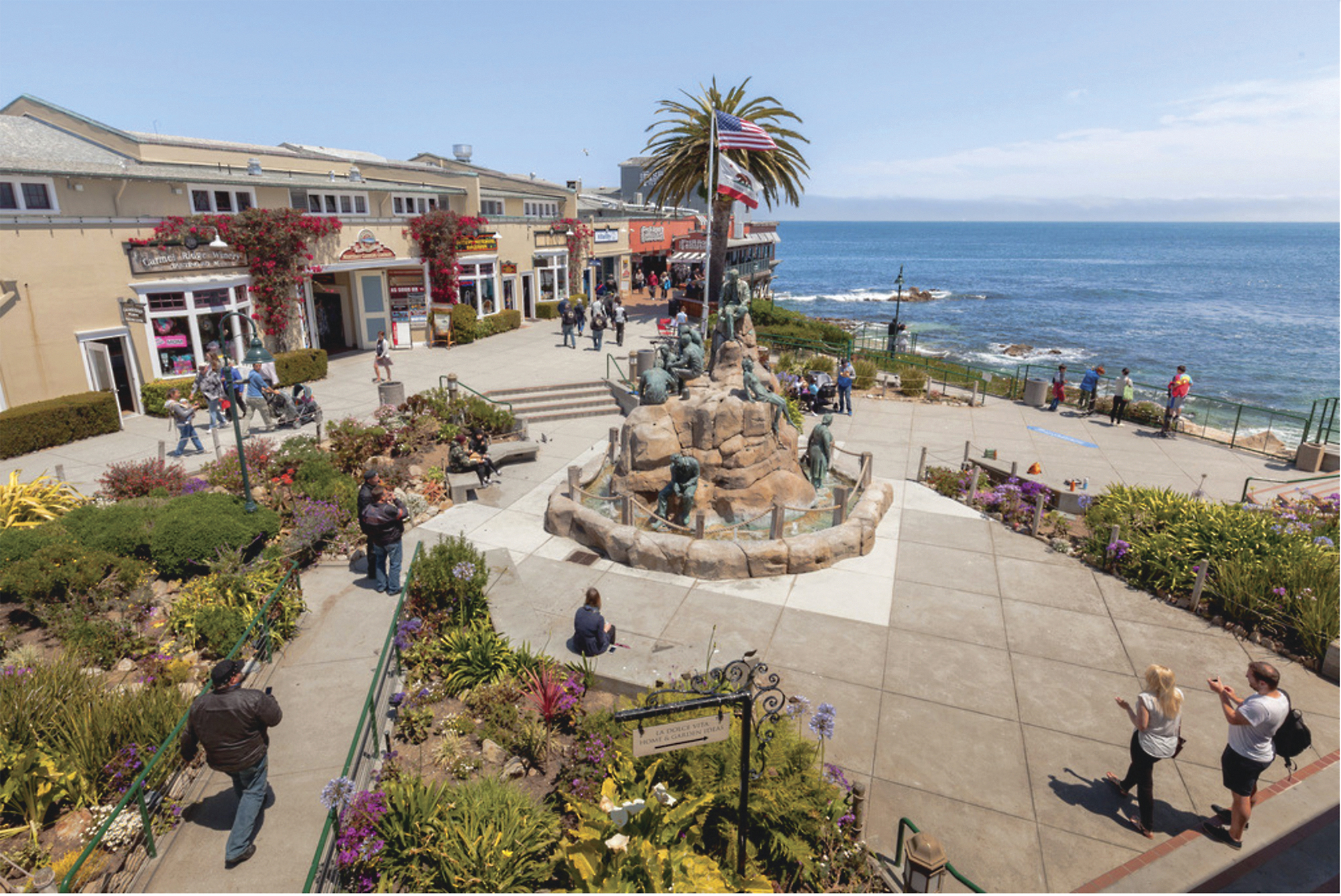
Families find different touchpoints. The proximity to the Monterey Bay Aquarium keeps anticipation high, and the flat paths make moving between attractions easy for kids. Ice cream stops, viewpoints, and kid-friendly menus offer natural breaks throughout the day.
Cannery Row is flexible: romantic when you need it to be, educational when you want it to be, and always tied to Monterey’s waterfront identity.
Science as Storytelling
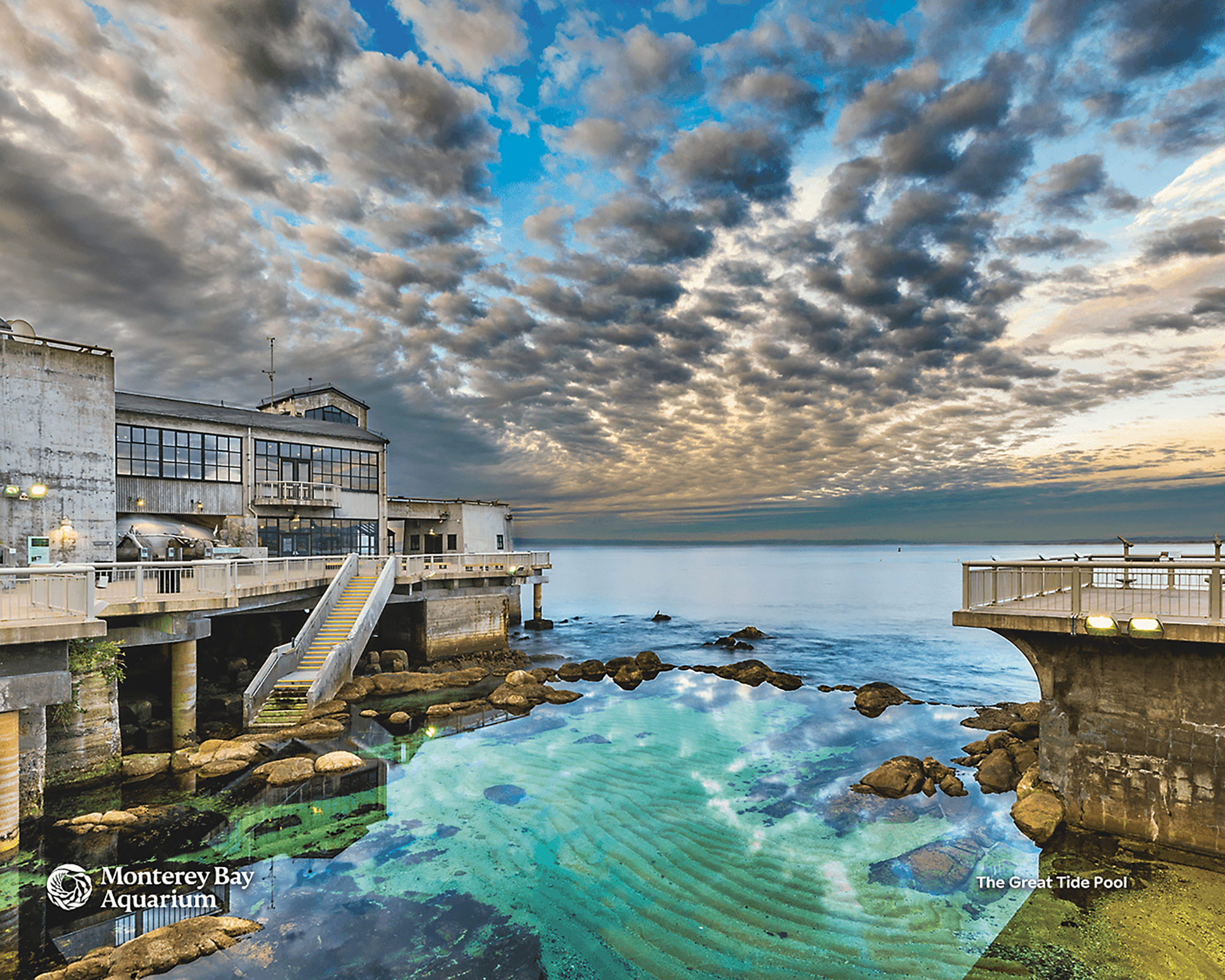
The Monterey Bay Aquarium is the connective tissue between Monterey’s natural and cultural history. Built inside a former cannery, it links the industrial past to the ecological present. Enjoy the zen of rooms filled with soft blue light, the hypnotic sway of the Kelp Forest, or the open expanse of the million-gallon Open Sea exhibit. Or, bring the family and follow sea turtles, lean over the touch pools, or watch in awe at the giant Pacific octopus as it unfurls its arms.
The Aquarium succeeds because it layers spectacle with substance. The Ocean’s Edge galleries anchor visitors in the near-shore ecosystem: tidepools, otters, rays, and the towering kelp that defines the bay’s underwater world. Move slowly through these spaces, absorbing visual details and enjoying the natural hush that settles over the exhibits.
The Open Sea expands everything outward: schools of sardines spinning like a single living fabric, tuna slicing through the blue, and jellies glowing in chambers that feel almost meditative. For families, this room is awe in its purest form—kids fall silent, captivated by the movement and scale.
Into the Deep, one of the most ambitious deep-sea exhibitions in North America, brings unfamiliar life to the surface: bioluminescent creatures, translucent drifters, and organisms that seem pulled from science fiction. Couples appreciate the science; children appreciate the strangeness.
No matter the timing, the Aquarium becomes an anchor memory – one of the places that gathers everyone’s attention at the same level, even if for different reasons.
The Working History of Fisherman’s Wharf
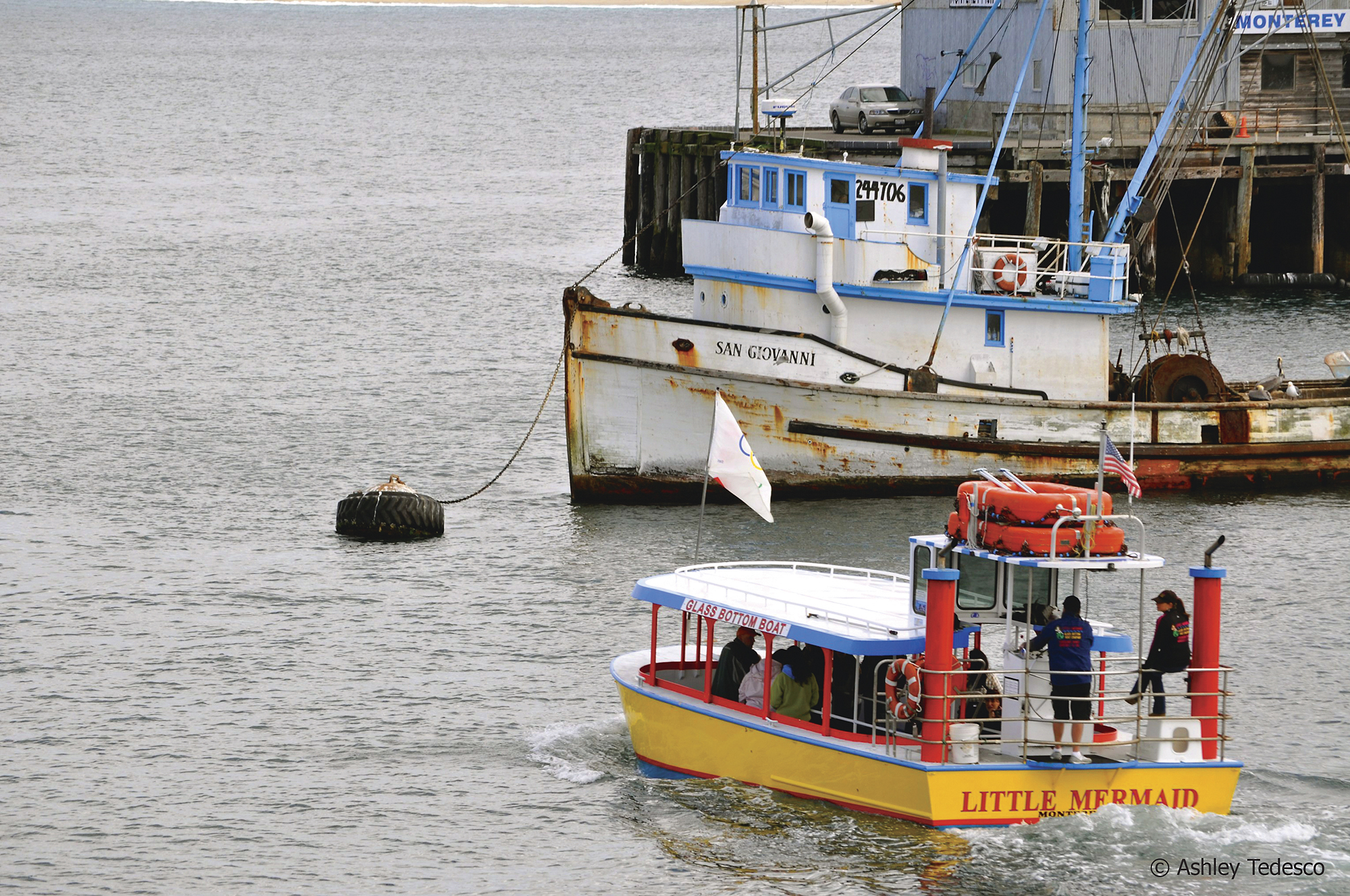
Old Fisherman’s Wharf carries the imprint of every era it has survived – Chinese abalone divers, Portuguese whalers, Japanese salmon fishermen, Italian sardine crews, and the evolving commercial fleets that shaped Monterey’s identity. Couples walking the planks feel the nostalgia immediately: the scent of chowder drifting from restaurants, sea lions barking beneath the pier, the view of sailboats sliding past the marina. It’s atmospheric, without trying to be.
For families, the Wharf is pure entertainment. Kids gravitate toward candy counters, taffy pullers, and the marine-life activity happening everywhere. Charter boats unload fishing catches. Whale-watching tours prepare for their next departure. Sea otters roll through the harbor grass as if performing on cue. Shops with windows full of shells, sweatshirts, and wooden boats still have the power to delight.
Looking to enjoy the Wharf at a quieter pace? A bay-view coffee from Water + Leaves, a shared chowder sampler from stands along the walkway, or a sunset dinner at Old Fisherman’s Grotto turns the experience into something intimate and nostalgic. Those looking for a deeper connection to the water can book a cruise with Monterey Bay Sailing or join a whale-watching tour through Princess Monterey or Discovery Whale Watch.
Families experience the Wharf as a series of unfolding events. Kids point out pelicans diving or seals sleeping on the docks. Glass-bottom boat rides offer an old-fashioned kind of fun. Restaurants like Crabby Jim’s and Paluca Trattoria stay loud enough that children blend right in, and the staff is used to tables filled with sandy shoes, coloring sheets, and the buzz of post-aquarium energy.
The Wharf’s gift is that it still feels like a working waterfront, even with its layers of dining and shops. History isn’t curated here – it’s simply present, woven into the way the tide moves around the pilings.
A Coastline Built for Wandering
Monterey’s outdoors is one of the rare places where the needs of couples and families overlap naturally. The coastline is wide enough for solitude, yet lively enough for kids to explore. Every viewpoint feels intentional; every trail feels accessible.
You can begin along the Monterey Bay Coastal Recreation Trail, a paved shoreline path ideal for long walks or easy bike rides. The route invites a slow pace. Relax on benches positioned for conversation, pause to watch sea otters roll in kelp, and take in viewpoints that unfold as the light changes. Morning and sunset are especially good, as the water moves from silvery blue to deep gold.
Families use the same trail differently: scooters, strollers, surrey bikes from Adventures by the Sea, and frequent stops for wildlife sightings. It’s a route that allows freedom while keeping everyone on the same visual page – ocean to the left, Cannery Row rising behind, the Aquarium anchoring the horizon.

Beaches offer the same dual experience. Couples gravitate toward the quiet edges of Del Monte Beach or the dramatic rocks at Asilomar, where they can settle into a pocket of sand and watch waves break against granite. Families spread out with buckets and boogie boards. Lovers Point becomes a natural gathering place: a protected cove for young swimmers, tidepools for explorers, lawns for picnics.
Anyone seeking immersion heads to Point Lobos State Natural Reserve, with short trails that feel cinematic and coves that appear carved for contemplation. Families appreciate Point Lobos for its contained distances and wildlife – sea lions, cormorants, and deer all common encounters.
Whether paddling through kelp forests in a kayak, watching sea lions along the Coast Guard Pier, or simply standing at the railing as the surf builds, Monterey’s outdoor spaces encourage shared experience. It’s a landscape perfectly suited to wandering – together or with kids racing ahead.
A Coastal Table for Every Type of Traveler
Monterey’s dining scene gives visitors a taste of its varied, approachable history shaped by the water. Couples find intimacy in ocean view dining rooms and quiet neighborhood bistros. Families find convenience, variety, and menus that accommodate all ages.
Couples often begin on Cannery Row. Restaurants like The Sardine Factory set the tone with historic dining rooms, soft lighting, and carefully composed seafood dishes. At Schooners Monterey, perched over the water, meals unfold with the steady rhythm of waves below. Wine lovers gravitate toward A Taste of Monterey, where flights come with panoramic bay views and a romantic setting without being formal.
Families, meanwhile, appreciate the practicality of Cannery Row’s casual restaurants. Louie Linguini’s, The Fish Hopper, and Bubba Gump Shrimp Co. offer kid-friendly menus and window seats overlooking kayakers and harbor wildlife. You’re guaranteed a good meal, a view, and something happening outside the window.
Old Fisherman’s Grotto and Crabby Jim’s anchor the Old Fisherman’s Wharf with classic seafood plates, while Paluca Trattoria offers outdoor seating right on the harbor.
Couples and singles often expand outward for dinner – check out Passionfish in Pacific Grove for sustainable seafood and an excellent wine list, or Carmel’s intimate spots like La Bicyclette and Anton & Michel. These smaller dining rooms offer quieter pacing, ideal after a day outdoors.
Families find balance with casual spots and sweet treats. Ice cream from Ghirardelli or saltwater taffy from Carousel Candies becomes part of the ritual. Farmers’ markets provide easy picnic-ready meals to take to the beach.
Dining in Monterey works because the food is tied directly to the setting. Whether lingering over wine or juggling crayons and clam chowder, every meal carries a little of the coastline with it.
Between the unforgettable sights and the living history, Monterey will be a memorable trip for any visitor.